Current Sensors
LEM is a leading supplier of current sensors (also called current transducers), offering a wide range of galvanically isolated sensors that have become industry standards. The broad range of sizes, measuring range, from tiny currents to 24kA, and integration options, busbar, PCB mounted, make them ideal solutions for a broad range of applications.
What is a current sensor used for?
As its name suggests, a current sensor measures the flow of current in a conductor.
It can be used in a wide variety of applications, to control the electrical parameters of a locomotive engine for example, or the state of charge of an electric car battery.
For more than 50 years, LEM has grown its expertise and current sensor portfolio to answer the growing demand for current measurement solutions. With its broad portfolio of current sensors and voltage sensors, LEM can address many different applications and meet the various electrical measurement specifications of its customers, be it for accuracy, bandwidth, creepage.
This broad offer in current measurement solutions is the direct results of our many years of experience and expertise.
Current Transducer vs. Current Sensor
While the terms current sensor and current transducer are often used interchangeably, they can carry slightly different technical nuances depending on context.
| Feature | Current Sensor | Current Transducer |
|---|---|---|
| Definition | Device that detects electrical current | Device that converts current into a measurable signal |
| Output | May provide raw or processed signal | Typically provides standardized output (e.g., voltage or current) |
| Use in Industry | Common in automotive, industrial, and energy sectors | Same applications, often used in control systems |
| Technology Examples | Hall effect, Fluxgate, Rogowski coil | Hall effect transducer, Rogowski transducer |
At LEM, we design both current sensors and transducers to meet the highest standards of precision, reliability, and application-specific performance.
Measuring current using Hall effect, Fluxgate or Air core sensors
Current can be measured by a current transducer relying on different technologies.
A Hall Effect current sensor (open loop or closed loop) will provide an extended measuring range, good global accuracy while preventing from insertion losses.
The specificity of an air-core sensor is that it is working without a magnetic circuit. Also known as Rogowski current sensors, this technology is easy to use and allows for non-contact measurement of AC & pulsed signal.
The Fluxgate current sensor technology will bring the highest accuracy and a strong performance of the current measurement.
What Types of Current Sensors Does LEM Offer?
LEM’s portfolio of current sensing solutions is designed to meet the diverse needs of industrial, automotive, and energy applications. Our range includes current sensors, split-core sensors, current transformers, Rogowski coils, integrated current sensors, and automotive battery current sensors—each engineered for precision, reliability, and efficiency.
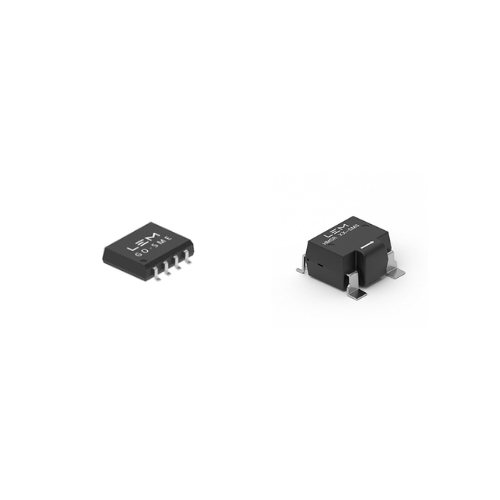
Current Sensor ICs
LEM’s integrated current sensors (ICs) combine advanced Hall-effect technology with compact packaging to deliver high accuracy and fast response times. These sensors are ideal for PCB integration in applications such as motor control, power supplies, and renewable energy systems. They offer galvanic isolation and are optimized for low power consumption and high bandwidth.
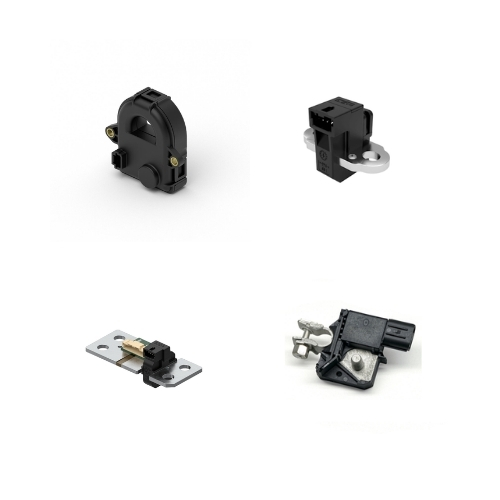
Battery Current Sensors
Designed specifically for automotive battery management, LEM’s battery current sensors support both EVs and ICE vehicles, enabling accurate monitoring of battery charge, health, and energy flow. Available for both high-voltage and low-voltage measurements, they are trusted by leading OEMs for safety, efficiency, and performance.
Featured LEM current sensors families
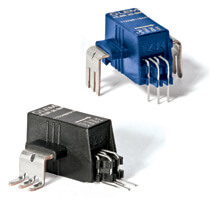
HLSR Series
HLSR is our best seller in the solar industry. It brings a lot of benefits along with a small footprint.
- DC&AC isolated current measurement with 5 ranges: 10 ARMS, 20 ARMS, 32 ARMS, 40 ARMS, 50 ARMS
- Access to voltage reference
- Low offset & gain drift
MAIN FEATURES
- Single supply +5 V or +3.3 V (2 different models)
- Isolation test voltage: 4.3 KVRMS / 50Hz / 1min
- Through hole (-P) or surface (-SM) PCB mounting models
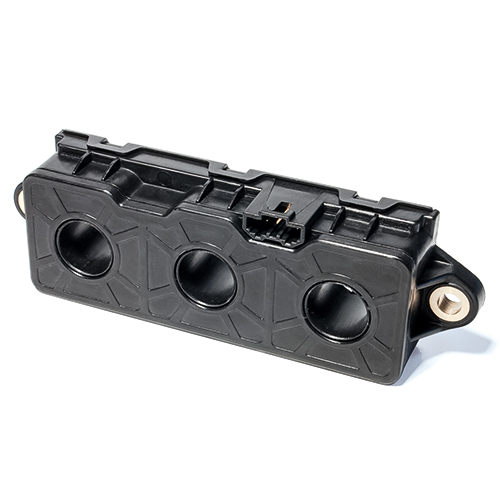
HAH3 Series
HAH3 is our 3 phase current sensor for automotive motor control
- Excellent accuracy
- Very good linearity
- Very low thermal offset drift
MAIN FEATURES
- Open Loop transducer using the Hall effect sensor
- Low voltage application
- Unipolar +5 V DC power supply
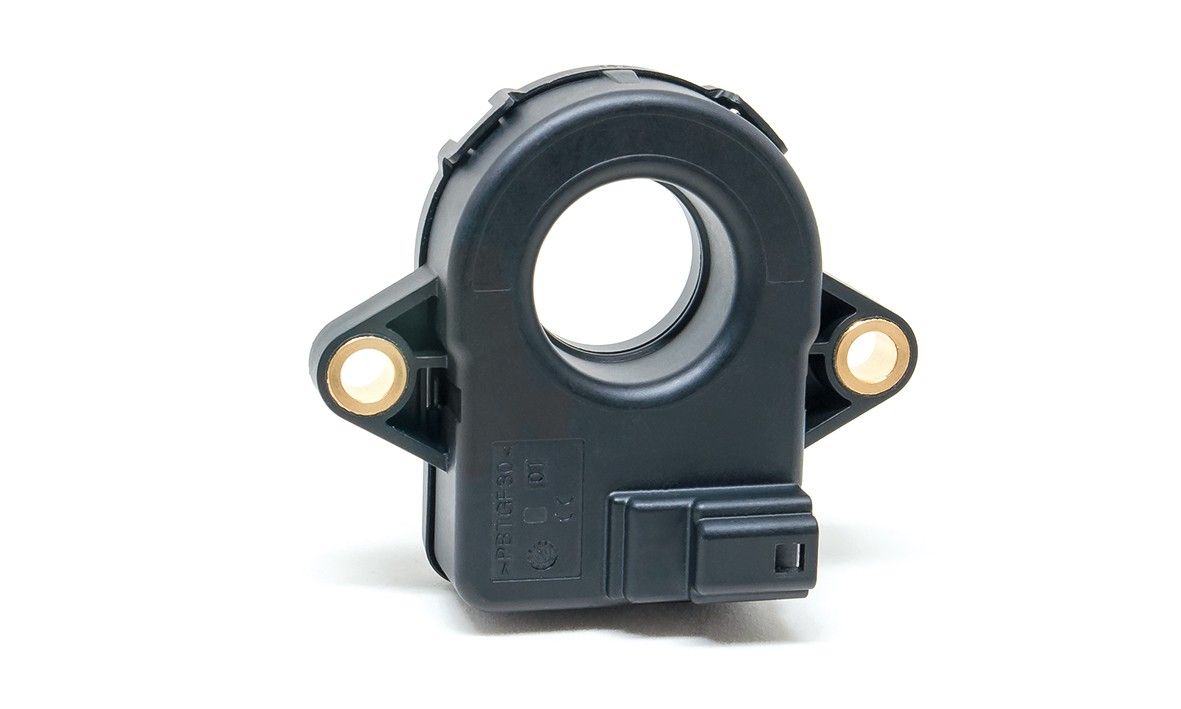
CAB Series
CAB is the best in class current transducer family for state of charge estimation in EV battery management systems
- High global accuracy (<0.5%) and low offset (<50mA)
- Measurement of bi-directional current up to 1500A
- Over Current Detection
MAIN FEATURES
- Fluxgate based measurement
- Automotive quality standards compliant
- Unipolar +12V battery power supply
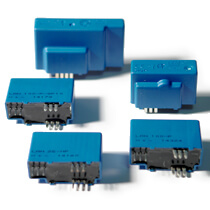
LAH Series
LAH family are closed loop current sensors dedicated to industrial applications
- PCB mounting design for isolated AC&DC current measurement of 8 to 125 ARMS nominal
- 2 different compact designs
MAIN FEATURES
- Dual supply +/- 12 to +/- 15 V
- Isolation test voltage: 5 kVRMS / 50 Hz / 1min
- Current output
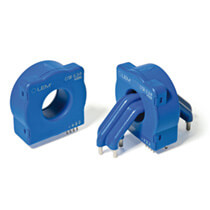
CTSR Series
CTSR is a closed loop current sensor with high accuracy and very low offset drift over temperature to ensure electrical safety in industrial applications
- 2 standard models
- PCB mounting
- Small currents' measurement from 0.3 to 0.6 ARMS nominal
MAIN FEATURES
- DC, AC, pulse, small currents' measurements with galvanic isolation
- Single supply: 0,+5V
- Non-contact measurement with high aperture (Ø 20.1 mm)
Which parameters need to be considered to select the right current sensor?
The selection of a current sensor is the result of a technical and economic trade-off, considering the sensor as well as the whole associated system.
Prior to selecting a current transducer, it is mandatory to consider all aspects of the intended application first.
The following parameters will need specific attention:
- Electrical requirements: power supply, peak measurement, response time…
- Mechanical requirements: aperture size, overall dimensions, mounting, materials…
- Thermal conditions: current profile versus time, maximum RMS measurement, cooling…
- Environmental conditions: vibrations, temperature, proximity of magnetic fields…
Performing tests in the specific application environment is also strongly recommended to make sure that the current sensor is the right fit for it.
Where do we find current sensors?
Current sensors are used in every area where electricity is used. And there are lots of domains complying to this:
Why Choose LEM Current transducers
LEM’s current transducers are engineered for high accuracy, fast response times, and robust performance across demanding environments.
Our Advantages
- Wide Product Range: From compact PCB-mounted transducers to high-power industrial models.
- Advanced Technologies: Hall effect, Fluxgate, and Rogowski coil options tailored to your needs.
- High Accuracy: Precise measurement for AC, DC, and complex waveforms.
- Global Standards Compliance: Designed to meet IEC, UL, and automotive-grade certifications.
Where to buy Current Transducers?
Looking to purchase LEM current transducers? Use our Check Stock Tool to view real-time availability from our trusted distributor partners.
This tool helps you find the right product quickly and ensures fast delivery through our global distribution network.
Want to know more about our current sensing offer?
Feel free to check our innovation page to know more about the technologies used in our current transducers offer.
You can also user our product list and its intuitive filters to select the right part for your application.
Our team remains available for any inquiry you might still have.
FAQ - Current Sensor, Current Transducer
Are current transducers the same as sensors?
| Not exactly. While both measure electrical current, a transducer typically refers to a device that converts current into a standardized output signal (like voltage or current), whereas a sensor may simply detect or monitor current. In many applications, the terms are used interchangeably, especially when the device includes signal conditioning. |
What’s the difference between open-loop and closed-loop transducers?
LEM offers both open-loop and closed-loop solutions to match your performance and budget requirements. |